
Recent news in Food & Feed Analysis
Food recalls in 2025: What went wrong and why it matters

The year 2025 witnessed a surge in food recalls and safety alerts worldwide, driven by stricter regulations, advanced testing technologies, and increasingly complex global supply chains. While recalls are often perceived negatively, they actually reflect a functioning safety system that prioritizes consumer health.
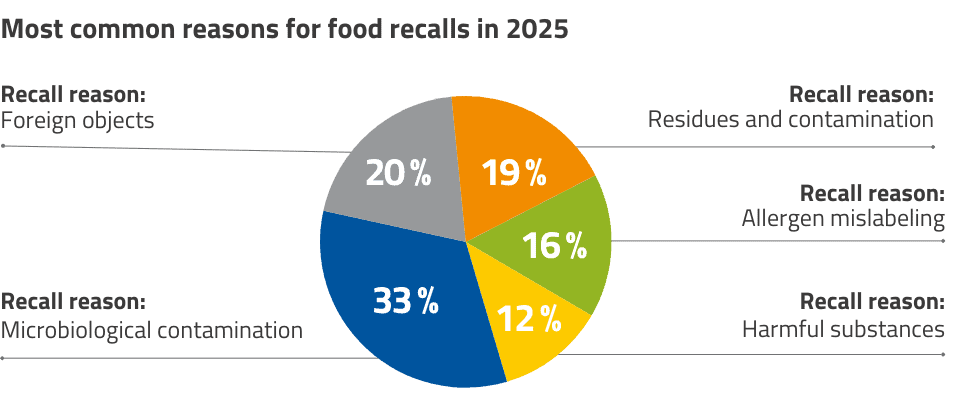
Microbiological contamination topped the list, accounting for roughly 33 % of all recalls. Pathogens such as Salmonella, Listeria monocytogenes, and E. coli were frequently detected in meat, poultry, fish, and ready-to-eat salads. These bacteria pose severe health risks, especially for vulnerable populations, and often originate from raw materials or inadequate hygiene during processing.
The second most common cause was foreign objects (20 %), including metal fragments, glass shards, and plastic pieces found in processed foods like confectionery and deli salads. Such contamination typically results from equipment malfunctions or packaging errors.
Residues and chemical contaminants represented about 19 % of recalls, with pesticides in fresh produce and ethylene oxide in spices being major culprits. Emerging concerns such as PFAS (“forever chemicals”) in meat products also gained attention, highlighting the growing complexity of chemical safety.
Allergen mislabeling (16 %) remained a persistent issue, often involving undeclared allergens like nuts, milk, or sesame. For allergic consumers, even trace amounts can be life-threatening, making accurate labeling critical.
Finally, harmful substances such as mycotoxins (e.g., Ochratoxin A) contributed to
12 % of recalls, particularly in seeds and cereals.
Why the increase? Enhanced analytical methods now detect contaminants at extremely low levels, while globalized supply chains introduce more risk points. Combined with heightened consumer awareness and transparency requirements, recalls have become more frequent – but also more effective in preventing harm.
For businesses, these trends underscore the importance of robust quality control, supplier audits, and digital traceability systems. For consumers, they serve as a reminder to stay informed and check official alert platforms regularly.