

Food allergens
Reliable analytical solutions for your allergen management
Food allergen testing
The importance of food allergen management
For most people, consuming food is harmless, but for those with food allergies, it can cause life-threatening reactions and significantly impact their quality of life. Effective food allergen management using reliable testing methods is therefore critical.
Prevalence of food allergies and intolerances
Scientists estimate that approximately 2-4% of adults and 6-8% of children suffer from food allergies. Additionally, a significant number of people have food intolerances, although their exact prevalence is difficult to determine due to a lack of comprehensive studies. Unlike food intolerances, food allergies are highly dangerous because they are caused by immune system reactions triggered by proteins to which individuals are sensitized.
The need for accurate allergen labeling
Labeling allergenic proteins, known as allergens, is crucial for protecting allergic individuals. Hidden allergens, which can appear in convenience foods or as unintended contaminants during storage and production, pose significant risks.
Allergen regulation
To safeguard allergic individuals, the EU implemented food labeling regulations, which are continuously updated (EU Regulation 1169/2011, effective December 2014). Since November 2005, food producers are required to label ingredients that can cause allergies or intolerances. This includes a comprehensive list of substances and products derived from them.
Furthermore, sulfur dioxide and sulfites in concentrations over 10 milligrams per kilogram must be labeled. Other countries have similar regulations tailored to country-specific allergens, such as Histamine.
An interactive map of international allergen regulations is available from the Food Allergy Research and Resource Program (FARRP).
Allergen risk management
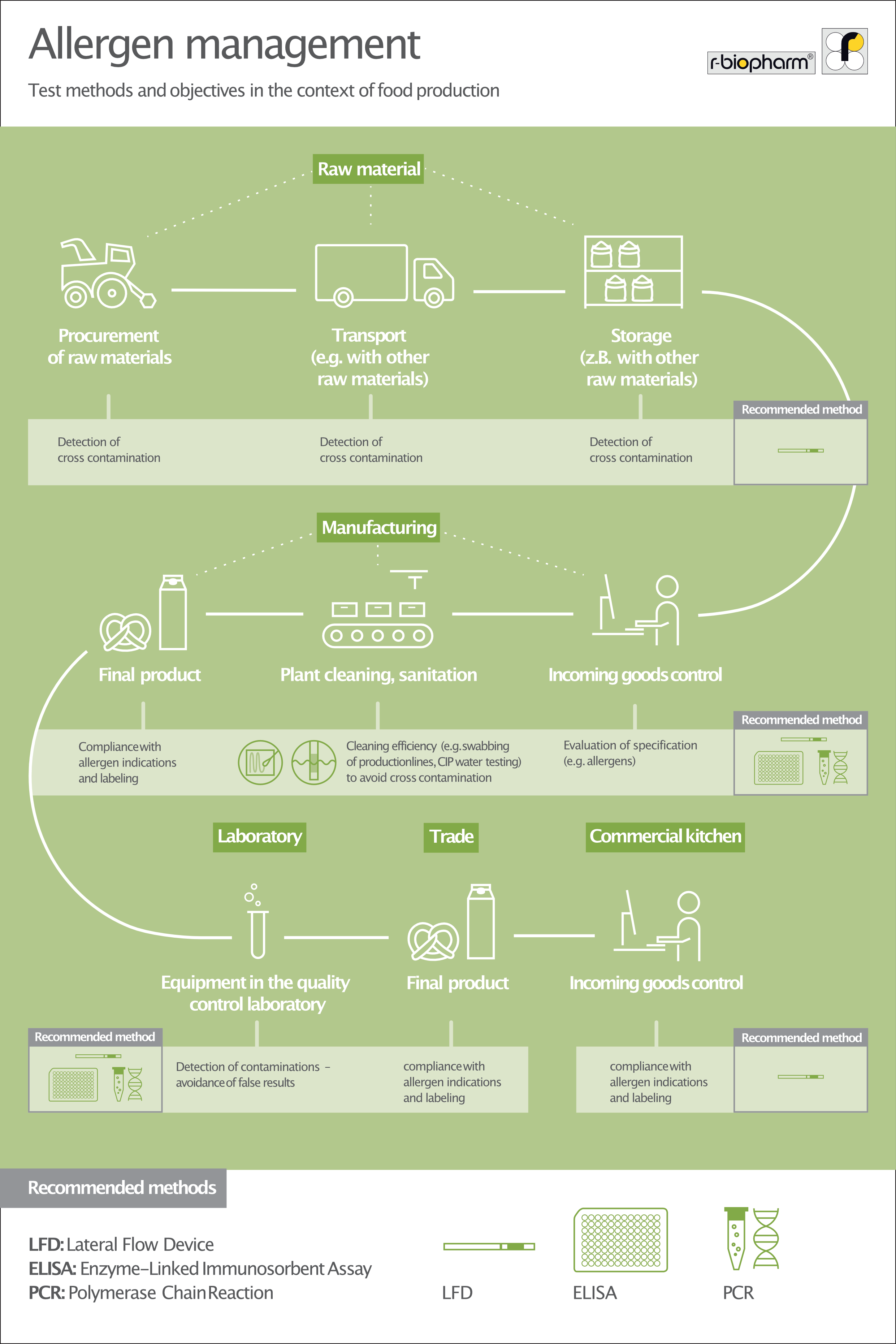
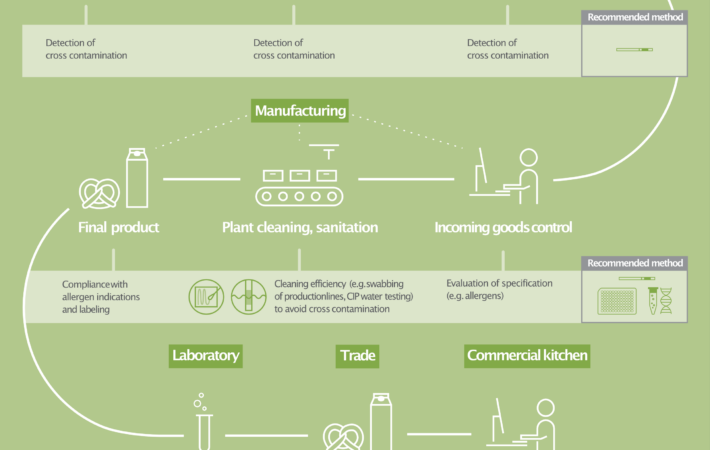
In most production lines, multiple products are produced, leading to potential unintended allergen contamination. This can occur through cross-contact of raw materials, inadequate storage, shared production equipment, airborne dust, improper reuse of leftovers, or faulty packaging. To protect consumers and ensure accurate labeling, an HACCP (Hazard Analysis Critical Control Point) concept, including reliable on-site allergen analysis, must be implemented. Effective measures such as strategic production schedules and rigorous cleaning practices can minimize cross-contact with allergens.
Test kits for allergen analysis
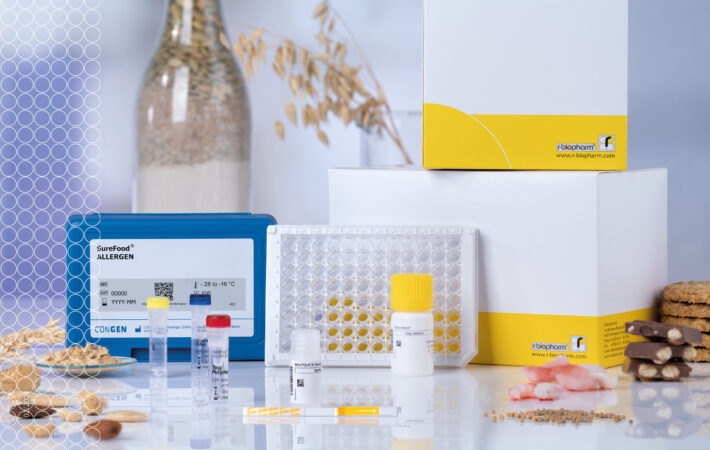
R-Biopharm offers a range of immunochemical (ELISA, lateral flow tests) and molecular biological (PCR) techniques for allergen analysis. Our extensive portfolio includes test kits for almond, casein, crustacean, egg, gluten/gliadin, hazelnut, β-lactoglobulin, lupine, milk, mustard, peanut, sesame, and soy. Conducting allergen analysis requires an allergen-free laboratory to ensure accurate results.
The bioavid lateral flow tests are now available in a new format, which includes a hook line and everything needed for cleaning control. Find out more about our bioavid lateral flow tests.
Explore our video section to get hands-on information on allergen analysis and the test procedure of our kits.
Product portfolio
| Product | Description | No. of tests/amount | Art. No. |
|---|---|---|---|
| RIDASCREEN®EASY Hazelnut |
RIDASCREEN®EASY Hazelnut (Art. No. RAE6401) is a sandwich enzyme immunoassay for the quantitative analysis of contaminations by hazelnut protein in foods. Hygiene samples can be investigated according to an application note, too. Read more |
Microtiter plate with 96 wells (12 strips with 8 removable wells each) |
RAE6401 |
| RIDASCREEN®EASY Crustacean |
RIDASCREEN®EASY Crustacean (Art. No. RAE3001) is a sandwich enzyme immunoassay for the quantitative analysis of contaminations by crustacean protein in foods. Hygiene samples can be investigated according to an application note, too. Read more |
Microtiter plate with 96 wells (12 strips with 8 removable wells each) | RAE3001 |
| RIDASCREEN® Walnut |
RIDASCREEN® Walnut (Art. No. R6601) is a sandwich enzyme immunoassay for the quantitative analysis of raw and roasted walnut or walnut protein in food. Due to the large number of different food products, the following samples were examined as … Read more |
Microtiter plate with 96 wells (12 strips with 8 removable wells each) | R6601 |
| RIDASCREEN®EASY Mustard |
RIDASCREEN®EASY Mustard is an enzyme immunoassay for the quantitative determination of mustard. Read more |
Microtiter plate with 96 wells (12 strips with 8 removable wells each) | RAE8201 |
| RIDASCREEN®EASY Gluten |
Fast and easy ELISA test method for gluten detection! Ensures a safe, fast and easy quantitative analysis of gluten residues from wheat, rye and barley within 30 minutes, delivering results that are in line with the Codex Alimentarius Type I Method … Read more |
Microtiter plate with 96 wells (12 strips with 8 removable wells each) | RAE7071 |
| RIDASCREEN® Total Gluten |
Specialty ELISA test method for gluten detection in oats! Ensures safe quantitative analysis of gluten residues from gluten-containing cereals (wheat, rye and barley) in oat and oat products. RIDASCREEN® Total Gluten is a sandwich enzyme immunoassay … Read more |
Microtiter plate with 96 wells (12 strips with 8 removable wells each) | R7041 |
| RIDASCREEN® Peanut |
RIDASCREEN® Peanut is a sandwich enzyme immunoassay developed for the quantitative analysis of peanut or peanut proteins in food. Due to the large number of different food products, the following samples were examined representatively for different … Read more |
Microtiter plate with 96 wells (12 strips with 8 removable wells each) | R6811 |
| RIDASCREEN® Egg |
RIDASCREEN® Egg is a sandwich enzyme immunoassay developed for the quantitative analysis of native and processed hen´s egg in foods. The following foods were examined as representatives of the group of products including baked goods, sweets, … Read more |
Microtiter plate with 96 wells (12 strips with 8 removable wells each) | R6411 |
| RIDASCREEN®FAST Gliadin sensitive |
Fast and sensitive ELISA test method for gluten detection Ensures a safe, fast and sensitive quantitative analysis of gluten residues from gluten containing cereals (wheat, rye and barley). RIDASCREEN®FAST Gliadin sensitive is a R5-based sandwich … Read more |
Microtiter plate with 96 wells (12 strips with 8 removable wells each) | R7051 |
| RIDASCREEN® Gliadin |
Reference ELISA test method for gluten detection! Ensure safe quantitative analysis of prolamins from wheat (gliadin), rye (secalin) and barley (hordein) in food with the reference method. The RIDASCREEN® Gliadin in combination with the Cocktail … Read more |
Microtiter plate with 96 wells (12 strips with 8 removable wells each) | R7001 |
| RIDASCREEN®FAST Cashew |
The RIDASCREEN®FAST Cashew is a sandwich enzyme immunoassay developed for the quantitative analysis of Cashew in food. Exemplarily for the food groups pastries and sweets have been tested during the assay’s development: cookies, chocolate and ice … Read more |
Microtiter plate with 48 wells (6 strips with 8 removable wells each) | R6872 |
| RIDASCREEN®FAST Hazelnut |
RIDASCREEN®FAST Hazelnut is a sandwich enzyme immunoassay for the quantitative analysis of hazelnut (e.g. traces of hazelnut) in food such as cereals, bakery products, ice cream and chocolate. Read more |
Microtiter plate with 48 wells (6 strips with 8 removable wells each) | R6802 |
| RIDASCREEN®FAST Sesame |
RIDASCREEN®FAST Sesame is a sandwich enzyme immunoassay for the quantitative analysis of sesame or parts of sesame (as ingredient components or contamination) in instant soup, chocolate dessert, bakery products and crackers. Read more |
Microtiter plate with 48 wells (6 strips with 8 removable wells each) | R7202 |
| RIDASCREEN®FAST Soya |
RIDASCREEN®FAST Soya is a sandwich enzyme immunoassay for the quantitative analysis of native and processed soya proteins in food. Such products are beverages and food as sausages, dressings, bakery products, ice, chocolate, soup, sauce, margarine, … Read more |
Microtiter plate with 48 wells (6 strips with 8 removable wells each) | R7102 |
| RIDASCREEN®FAST Milk |
RIDASCREEN®FAST Milk is a sandwich enzyme immunoassay to quantify milk proteins (casein and ß-lactoglobulin) in food containing whey, milk or milk powder such as sausages, ice cream, chocolate, bakery goods, cake and bread mix, soups, sauces, … Read more |
Microtiter plate with 48 wells (6 strips with 8 removable wells each) | R4652 |
| RIDASCREEN®FAST β-Lactoglobulin |
RIDASCREEN®FAST β-Lactoglobulin is a sandwich enzyme mmunoassay for the quantitative analysis of native and processed β-lactoglobulin in rice crispies, chocolate and sausage. Read more |
Microtiter plate with 48 wells (6 strips with 8 removable wells each) | R4912 |
| RIDASCREEN® ß-Lactoglobulin |
RIDASCREEN® ß-Lactoglobulin is a competitive enzyme immunoassay for the quantitative analysis of β-lactoglobulin in hydrolyzed milk products including hypoallergenic baby food. The assay is calibrated to hydrolyzed β-lactoglobulin check … Read more |
Microtiter plate with 96 wells (12 strips with 8 removable wells each) | R4901 |
| RIDASCREEN®FAST Lysozym |
RIDASCREEN®FAST Lysozym is a sandwich enzyme immunoassay for the quantitative analysis of lysozyme (hen’s egg protein) in food like wine, cheese and sausage. Read more |
Microtiter plate with 48 wells (6 strips with 8 removable wells each) | R6452 |
| RIDASCREEN®FAST Lupine |
RIDASCREEN®FAST Lupine is a sandwich enzyme immunoassay for the quantitative analysis of lupine proteins in food (e.g. juices, wine, beer, sausages, noodles, chocolate, bakery products or ice cream). Read more |
Microtiter plate with 48 wells (6 strips with 8 removable wells each) | R6102 |
| RIDASCREEN® Gliadin competitive |
Specialty ELISA test method (competitive) for gluten detection in fermented and hydrolyzed food! Ensures safe quantitative analysis of prolamine peptide fragments from wheat (gliadin), rye (secalin) and barley (hordein) in fermented or hydrolysed … Read more |
Microtiter plate with 96 wells (12 strips with 8 removable wells each) | R7021 |
| RIDASCREEN®FAST Gliadin |
Fast ELISA test method for gluten detection! Ensures a safe and fast quantitative analysis of prolamins from wheat (gliadin), rye (secalin) and barley (hordein) in food. RIDASCREEN®FAST Gliadin is a sandwich enzyme immunoassay for the quantitative … Read more |
Microtiter plate with 48 wells (6 strips with 8 removable wells each) | R7002 |
| RIDASCREEN®FAST Almond |
RIDASCREEN®FAST Almond is a sandwich enzyme immunoassay for the quantitative analysis of almond or parts of almond in food. As representative samples for the food groups pastries and sweets the following matrices have been tested during the assay´s … Read more |
Microtiter plate with 48 wells (6 strips with 8 removable wells each) | R6901 |
| RIDASCREEN®FAST Egg Protein |
RIDASCREEN®FAST Egg Protein is a sandwich enzyme immunoassay for the quantitative analysis of whole egg (-powder) in food like salad dressings, sausages, wines, baking-mixtures for cakes or bread and ice cream. Read more |
Microtiter plate with 48 wells (6 strips with 8 removable wells each) | R6402 |
| RIDASCREEN®FAST Casein |
RIDASCREEN®FAST Casein is a sandwich enzyme immunoassay for the quantitative analysis of casein in food like bakery goods, cake and bread mix, non-hydrolyzed milk-based infant formula, ice cream, beverages, chocolate, wine and sausages. Read more |
Microtiter plate with 48 wells (6 strips with 8 removable wells each) | R4612 |
FAQ
A food allergy is an overreaction of the immune system to certain components of foods, usually proteins. The body mistakenly identifies these normally harmless substances as dangerous and produces specific antibodies (IgE antibodies).
Upon repeated contact with the allergy triggering food, these antibodies cause an allergic reaction.
Typical symptoms of a food allergy include:
- Itching
- Skin rash or hives
- Swelling in the mouth and throat area
- Breathing difficulties or shortness of breath
In severe cases, a life threatening allergic shock (anaphylaxis) can occur.
Common triggers of food allergies include:
- Nuts (e.g., almonds, hazelnuts)
- Peanuts
- Milk
- Eggs
- Soy
No, lactose intolerance is not an allergy but a food intolerance. Food intolerances are non allergic reactions to certain foods and are classified as metabolic disorders. They occur when an enzyme defect or enzyme deficiency prevents the body from properly processing ingested or released substances.
In the case of lactose intolerance, the body lacks partially or completely the enzyme lactase, which is needed to break down milk sugar (lactose). If lactose cannot be sufficiently digested, it passes undigested into the large intestine. There, the unprocessed lactose causes symptoms such as bloating, abdominal pain, or diarrhea.
Symptoms such as abdominal pain, diarrhea, or nausea can be triggered by certain foods. These symptoms may be caused by either a food intolerance or a food allergy. In both cases, it can help to adjust the diet and avoid specific foods.
In the case of a food allergy, the immune system overreacts. It perceives harmless substances, usually proteins, as dangerous and triggers a rapid and often strong reaction. Even very small amounts can be enough to cause symptoms.
A food intolerance, on the other hand, develops without the involvement of the immune system. Enzymes are often lacking, making it difficult for the body to process certain components of food. Symptoms occur with a delay and are generally not dangerous.
Yes, there are mandatory labelling requirements for allergens.
In the EU, the Food Information Regulation (LMIV) governs the labelling of 14 major allergens (Regulation (EU) No. 1169/2011). These must be clearly indicated on both pre packed and non pre packed foods.
Outside the EU, similar rules exist. The Codex Alimentarius (FAO/WHO) recommends worldwide labelling of the most important allergens and serves as a basis for legislation in many countries. In the United States, the Food Allergen Labelling and Consumer Protection Act (FALCPA) requires the labelling of currently 9 major allergens. Countries such as Canada, Australia, Japan, and New Zealand also have their own comparable regulations. However, there is no globally uniform standard.
The goal of all these regulations is to protect consumers.
Food products must be tested for allergens to protect the health of individuals with allergies. Even very small amounts of an allergen can trigger severe or life threatening reactions in sensitive individuals.
Allergen testing helps ensure that labelling information is accurate and that no unintended cross contamination occurs during production, storage, or transport. Manufacturers are also legally required to demonstrate compliance with labelling and threshold requirements (e.g., according to EU Regulation (EU) No. 1169/2011 and other international standards).
In addition, regular testing strengthens consumer trust, reduces product recalls, and supports companies in quality assurance. Allergen testing is therefore a central component of allergen management and essential for consumer protection and food safety.
In most countries, there are no defined threshold values for allergens in foods that apply to all products. Even small amounts can trigger severe reactions in sensitive individuals. Therefore, any allergen that is present must be clearly declared, as required by EU Regulation (EU) No. 1169/2011.
However, for dealing with cross contamination, some countries or organizations have developed reference values or guideline levels, such as the VITAL (Voluntary Incidental Trace Allergen Labelling) guidelines. These guidelines provide risk assessments for allergens based on clinical data about the minimum eliciting dose that can cause reactions in allergic individuals. This helps companies determine when a precautionary allergen label (PAL), such as “may contain traces of…”, is appropriate.
These guidelines are not legally binding, but they help minimize risk and support manufacturers in producing safe products for consumers. The goal is to offer maximum safety for people with allergies while avoiding unnecessary warning labels.
Since 2026, the Netherlands have a legally mandatory regulation regarding PAL. As part of this regulation, reference doses for each allergen were defined based on clinical data. In combination with the consumption size of a product, this allows the calculation of an action level for the respective food.
With the support of analytical testing and a risk assessment, manufacturers can determine whether the action level is exceeded and the product therefore requires PAL labelling, or whether consumption remains safe for the consumer without additional warnings.
For the analysis of allergens in food, different test systems are used, each with its own sensitivity and application range:
ELISA (enzyme immunoassay):
- most commonly used method in routine diagnostics
- detects specific allergenic proteins (the allergy triggering components)
- quantitative results
Rapid tests (lateral flow tests):
- primarily used on site for testing raw materials or production lines
- provide fast qualitative results
- for some allergens, quantitative rapid tests are also available
PCR methods (DNA based tests):
- detect DNA from allergen containing ingredients, even when the proteins have been altered by processing
- Multiplexing possible
Mass spectrometry (LC MS):
- highly specific
- can identify proteins and peptides even in heavily processed foods
- requires significant effort and cost
- demands extensive technical expertise
- involves complex sample preparation
Used only rarely within allergen management.
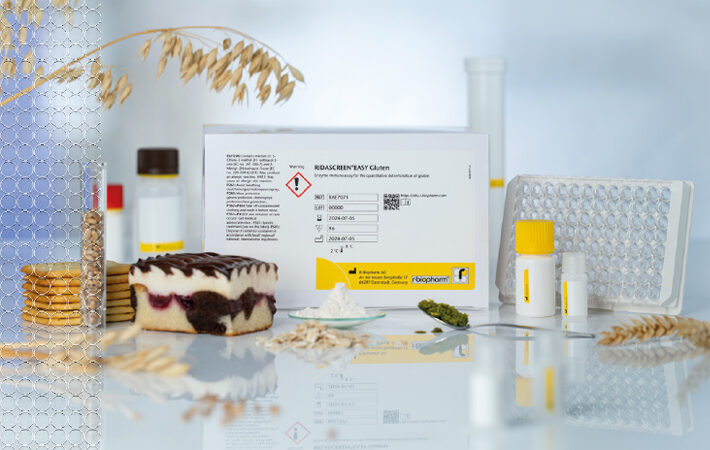
An ELISA is used when allergens in food need to be detected quantitatively. ELISA detects proteins and provides accurate concentration values. It is ideal for laboratory analyses, quality assurance, and traceability of raw materials or finished products. The overall testing process, including sample preparation and assay performance, takes about one hour. However, heavily processed foods can make protein detection more difficult.
For example, with RIDASCREEN®EASY Hazelnut and RIDASCREEN®EASY Mustard, hazelnut proteins or mustard proteins can be quantitatively measured in food products.
An LFD (lateral flow device / rapid test) is used when quick results are required. For example, it can be applied directly during incoming goods inspection of raw materials, for hygiene monitoring of production lines, for testing rinse water, or for on‑site product checks. LFDs are easy to use and provide qualitative results within minutes.
With the bioavid Lateral Flow Soy incl. Hook Line or the bioavid Lateral Flow Milk, soy or milk residues in food can be analyzed within 15 minutes.
A PCR test is used when allergen containing DNA needs to be detected. It is particularly useful for heavily processed foods, where proteins may be destroyed, or for allergens that are difficult to detect with immunological tests (ELISA, LFD) due to cross reactivities of the assay (e.g. celery or mustard).
PCR is highly specific and sensitive, making it especially suitable for controlled laboratory analyses and traceability.
Real-time PCR supports screening, quantification, and multiplex analyses, allowing multiple parameters to be detected in a single run. The method is also ideal for confirmation testing and advanced species identification.
The RIDASCREEN® Allergen kits from R Biopharm enable reliable and sensitive detection of numerous food allergens.
Detectable allergens:
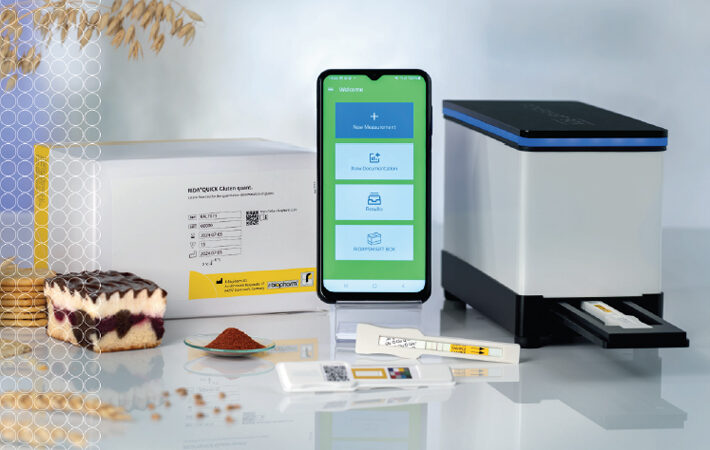
The RIDA®QUICK and bioavid Allergen Kits from R-Biopharm enable reliable and sensitive detection of numerous food allergens.
Detectable allergens:
- Gluten (qualitative and quantitative)
- Soy (with hook line and without hook line)
- Milk
- Casein
- Coconut
- Almond
- Brazil nut
- Mustard
- Hazelnut
- Macadamia
- Peanut
- Walnut
- Egg
- Sesame
- Cashew
- Pistachio
- Crustacean
The SureFood® Allergen PCR kits from R‑Biopharm enable reliable and sensitive detection of a wide range of food allergens. These kits support qualitative and quantitative analysis of the following allergens:
Detectable allergens:
- Almond
- Brazil nut
- Buckwheat
- Cashew
- Celery
- Crustaceans
- Fish
- Gluten‑containing cereals: wheat, barley, rye, oat
- Hazelnut
- Lupin
- Macadamia
- Molluscs
- Mustard
- Peanut
- Pistachio
- Sesame
- Soya
- Walnut
- Coconut
- Beechnut
- Pine nut
- Shea nut
For quantitative analysis, the reference material SureFood® QUANTARD Allergen 40 is recommended.
For LOD detection, SureFood® QUANTARD Allergen 1 ppm is available.
For broad allergen screening, the multiplex kits are especially suitable, as they allow simultaneous detection of multiple allergens.
Food products consist of many different components such as fats, carbohydrates, and proteins, as well as vitamins and trace elements. Since each food has a different composition, this so called matrix can influence the analysis of allergens. Such matrix effects may be unspecific (e.g., interferences) or specific (e.g., cross reactions with the test system).
In addition, processing steps can alter the structure of proteins that are detected in immunological tests:
- High temperatures during baking or roasting can denature proteins, meaning they lose their natural structure.
- Fermentation, as in beer production, can break down proteins.
Both processes affect how well allergenic proteins can be detected.
In principle, any food can be tested for allergens, but it must first be evaluated to ensure it is suitable for the specific test system before being used in routine analysis. It is particularly important that the sample is homogeneous, meaning well mixed, to achieve reliable results.
In principle, allergens can also be detected in hydrolyzed and fermented foods. However, it must be taken into account that proteins may be partially or completely broken-down during hydrolysis or fermentation. Immunological tests can only recognize these altered structures under certain conditions.
In sandwich ELISAs (antibody-antigen-antibody), only larger protein fragments containing at least two epitopes can be detected. If proteins are broken-down into many small fragments, they can only be detected using competitive test systems, where a single epitope is sufficient for recognition. For example, RIDASCREEN® β‑Lactoglobulin is a competitive ELISA suitable for the quantitative determination of β‑lactoglobulin in hydrolyzed milk products.
Because the actual degree of hydrolysis or fermentation is often unknown for many products, choosing the appropriate test method can be challenging. Therefore, samples with an unknown level of hydrolysis should always be analyzed using both test systems (sandwich and competitive). The higher result is considered the more reliable one.
So-called incurred samples are food samples in which an allergen is intentionally incorporated into the product before processing. Unlike spiked samples, where the allergen is added only to the finished end product, the allergenic proteins in incurred samples pass through the entire manufacturing process of a food.
This approach realistically simulates natural contamination during production. Because proteins undergo structural changes during processing steps such as mixing, heating, baking, roasting, or fermentation, these changes affect how well they can be detected by a test method. For this reason, incurred samples are considered realistic and representative test materials.
A typical example is a cookie in which the dough is homogenously mixed with 10 mg of hazelnut flour before baking. During baking, the high temperatures modify the structure of the hazelnut proteins, mirroring the changes that occur in real industrial processes.
Official bodies such as the AOAC also recognize the importance of incurred samples and updated their guidelines for validating immunological test systems for food allergens accordingly in 2023.
The test systems RIDASCREEN®EASY Hazelnut, RIDASCREEN®EASY Mustard, and RIDASCREEN®EASY Crustacean belong to the RIDASCREEN®EASY Allergen ELISA product line, which has been validated using incurred samples in line with the latest AOAC requirements.
When analyzing allergens, various factors must be taken into account to correctly interpret the results. A central aspect is the test system and the result format: the analysis may have been carried out using an immunological method such as ELISA or LFD, or with PCR. Depending on the method, the result may be qualitative (result output yes/no) or presented as a quantitative measurement value, which greatly influences its significance.
It is equally important to consider what is actually being detected. Immunological tests identify proteins or protein fragments, whereas PCR detects only DNA. This means that a positive PCR result does not automatically indicate that the allergen is present in its protein active form in the food.
The type of sample also plays a significant role. Raw materials, finished products, hygiene monitoring samples, spiked samples, or processed foods differ considerably in their composition and therefore in their analyzability. In addition, matrix effects, such as interferences or cross reactions, can influence measurement results.
To obtain reliable results, the sample itself must also be carefully examined. Good homogeneity and suitable sample extraction are essential, as inhomogeneities or inadequate extraction conditions can lead to distorted results.
Finally, the measurement range of the respective test system must be considered. This includes the limit of detection (LoD) and the limit of quantification (LoQ). Values below these limits should not be overinterpreted, as they cannot be reliably quantified by the method.
Related media

Related news
Ensure Gluten-Free …
Gluten in means gluten out …

Analytical test kits for …
Which test for what? …
New gluten test kits for …
The gluten free market is …

Navigating food allergen …
The World Allergy Week …

Keep track of your …
The RIDA®SMART App Allergen …